Bongi Khumalo
Zimbabwe will centre its COP31 agenda on securing predictable adaptation funding, operationalising loss and damage support, and unlocking green technology transfers, placing climate finance at the core of its national position.
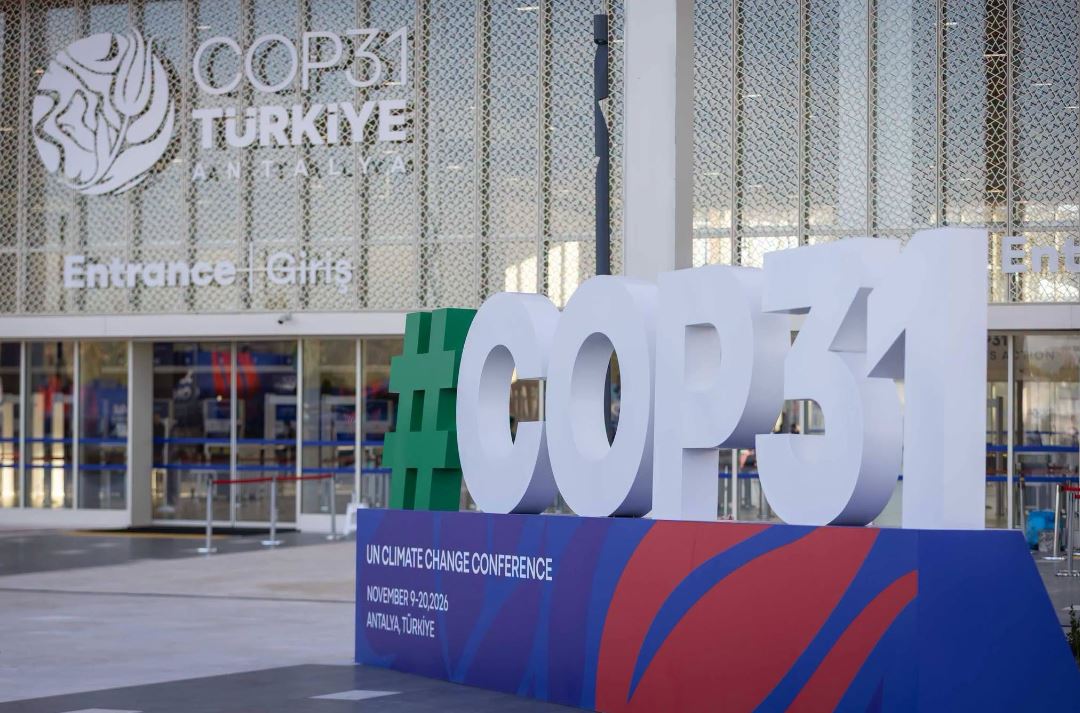
The climate change conference, scheduled for November 9 to 20 in Antalya, Türkiye, will bring together governments under the United Nations Framework Convention on Climate Change (UNFCCC) to negotiate further action on climate change and the implementation of the Paris Agreement.
The priorities, set out in a Ministry of Environment, Climate and Wildlife mission report on Zimbabwe’s participation in the 64th meetings of the UNFCCC Subsidiary Bodies (SB64), identify climate finance as a central issue for developing countries, particularly in relation to funding for adaptation, climate-related losses and damage, and the implementation of national climate commitments.
It also records unresolved differences between developed and developing countries over the provision of climate finance, the implementation of mitigation commitments and the governance of international climate programmes.
Zimbabwe’s participation at COP31 will follow technical negotiations at SB64, where several matters were deferred for further consideration during the November conference.
Climate finance remains a key negotiating issue
The report says developing countries, including members of the Africa Group of Negotiators (AGN), called for adequate, predictable and accessible financial support to implement adaptation measures.
One of the main areas of disagreement concerned the proposal to explicitly include a commitment to triple adaptation finance by 2035 under the Global Goal on Adaptation.
Developing countries wanted the commitment reflected in the framework, while developed countries opposed its inclusion, arguing that climate finance was already addressed under the UNFCCC.
The negotiations ended without agreement on substantive or procedural conclusions, with the matter postponed to the next session at COP31.
The report states that Zimbabwe should “advocate for scaled-up adaptation finance”, including support for the call to explicitly include the commitment to triple adaptation finance by 2035 through the AGN and the G77 and China negotiating bloc.
The climate finance discussions also covered Article 9.1 of the Paris Agreement, which requires developed countries to provide financial resources to assist developing countries with climate action.
According to the report, developing countries raised concerns over reductions in international climate finance commitments, including an overall 35% decrease in committed climate finance resources, a 27% reduction in the Global Environment Facility’s ninth replenishment, the cancellation of a US$1.1 billion commitment to the Green Climate Fund and the withdrawal of a US$4 billion commitment by the United States.
Developed countries, meanwhile, sought to broaden the contributor base, including through greater private-sector participation and voluntary contributions from countries outside the traditional donor group.
The report says developing countries also raised concerns over the reluctance of developed countries to discuss Article 9.5, which requires developed countries to communicate projected financial support every two years.
Zimbabwe is expected to support the AGN and G77 and China in seeking to ensure that the climate finance work programme remains focused on the obligations of developed countries under Article 9.1 and the broader provisions of Article 9.
The report further recommends strengthening national policy and institutional arrangements to improve the country’s ability to access climate finance, as well as developing a pipeline of adaptation projects in areas such as drought resilience, water security and climate-smart agriculture.
Zimbabwe’s US$20 million loss and damage proposal
Loss and damage financing is another issue identified in the report, which records Zimbabwe’s submission of a US$20 million concept note to the Fund for Responding to Loss and Damage (FRLD).
The proposal, titled Zimbabwe System-wide, Holistic and Integrated Effort on Loss, Damage and Recovery, was developed by the Ministry of Environment, Climate and Wildlife in collaboration with United Nations agencies.
The consortium comprises the World Food Programme, Food and Agriculture Organisation, United Nations Children’s Fund, United Nations Development Programme and World Vision Zimbabwe, with the WFP serving as the coordination lead.
The report says the concept note was submitted to the FRLD Secretariat and had received feedback that was being reviewed jointly by the ministry and participating agencies.
At the time of the report, Zimbabwe was expected to revise and resubmit the proposal ahead of the Fund’s second board meeting.
The FRLD had received an estimated US$820 million in pledges, of which approximately 50% had been monetised, according to the report.
It also records that the Fund had launched its first call for proposals under a US$250 million funding facility, targeting grants of between US$5 million and US$20 million for developing countries.
However, developing countries and other participants raised concerns over the pace of the Fund’s capitalisation.
The report cites estimates that US$250 billion would be required to address climate-related loss and damage, while pledges to the Fund had remained below US$1 billion.
Zimbabwe is expected to advocate for increased grant-based financing and additional, predictable resources through the AGN and G77 and China.
The report also calls for stronger national institutional and technical capacity to access and manage loss and damage funding.
National climate commitments and implementation
The implementation of Nationally Determined Contributions (NDCs) is another area expected to feature in the negotiations.
NDCs are national climate action plans submitted by countries under the Paris Agreement, setting out commitments to reduce greenhouse gas emissions and address climate impacts.
At SB64, developing countries, including Zimbabwe through the AGN, opposed proposals they considered would impose additional monitoring arrangements on countries’ nationally determined commitments.
Discussions under the Sharm el-Sheikh Mitigation Ambition and Implementation Work Programme ended without agreement on its continuation, governance and links to the Global Stocktake.
The report says Zimbabwe and the AGN maintained that developing countries had already demonstrated increased ambition in their NDCs, but faced constraints in securing the finance, technology and capacity required for implementation.
It records the position that “the missing link has always been the means of implementation (finance, technology and capacity building).”
The report recommends that Zimbabwe strengthen the implementation of its NDC 3.0 and establish the National Climate Fund following the enactment of the Climate Change Act.
It also calls for stronger links between carbon markets and climate action so that both mitigation and adaptation activities can benefit from carbon market mechanisms.
During a meeting with the NDC Partnership in Bonn, Zimbabwe identified several areas for potential cooperation, including revising its Long-Term Low Emission Development Strategy, developing sub-national Technology Action Plans, reviewing the proposed architecture of the National Climate Change Fund and developing a regulatory framework for climate finance.
The report also records discussions on a possible country platform supported by the Green Climate Fund to move climate investment from individual projects towards a programme-based approach.
Just transition and trade-related climate measures
Zimbabwe’s negotiating priorities also include the proposed operationalisation of the Just Transition Mechanism under the Paris Agreement.
The mechanism is intended to support countries and communities in managing the social and economic implications of transitioning towards lower-emission development pathways.
At SB64, African countries called for a formal institutional arrangement under the authority of the Conference of the Parties serving as the meeting of the Parties to the Paris Agreement (CMA).
The AGN argued that the mechanism should be guided by equity, the principle of common but differentiated responsibilities and respective capabilities, sustainable development and nationally determined pathways.
The report identifies limited fiscal space, debt burdens, inadequate access to technology and climate-related trade measures among the structural constraints facing developing countries.
Zimbabwe is advised to support a mechanism that provides grant-based finance, technology transfer, capacity-building and technical assistance.
Trade-related climate measures are also expected to remain part of the discussions.
At SB64, developing countries raised concerns that measures such as carbon border adjustments, carbon taxes and regulatory standards could increase export costs, create additional compliance requirements and affect access to international markets.
The report records concerns among African and other developing-country negotiating groups that such measures could constrain industrialisation, competitiveness and participation in green value chains.
Developed countries, including the European Union, United Kingdom, Switzerland, Canada and Norway, defended trade-related climate measures as tools for addressing carbon leakage and supporting innovation.
No substantive negotiated outcome was adopted on the matter at SB64. The dialogue remained exploratory, with unresolved questions about its governance and whether it should become a formal negotiating agenda item.
The report recommends that Zimbabwe continue engaging through the AGN on the basis of equity and the right to development, while undertaking research into the potential economic and trade implications of climate-related measures.
Agriculture, health and climate resilience
Agriculture and food security are also included in the report’s account of Zimbabwe’s engagement in the UNFCCC process.
At SB64, discussions under the Sharm el-Sheikh Joint Work on Implementation of Climate Action on Agriculture and Food Security focused on integrating climate action into national agricultural policies, plans and programmes.
The negotiations considered the need for stronger links between countries’ implementation needs and available financial and technical support.
The report recommends that Zimbabwe continue integrating climate-smart agriculture and food security measures into national planning, while developing a pipeline of projects that can be presented to potential funding partners.
Zimbabwe also participated in discussions on establishing a standalone climate change and health agenda item under the UNFCCC.
The country, supported by the World Health Organisation and other developing countries, had previously sought the inclusion of the issue at COP30, but parties failed to reach consensus.
Following consultations during SB64, the report says the proposal should be pursued through further engagement with countries to secure support before a possible request for a dedicated agenda item at COP32 in 2027.
The Africa Group and WHO also began developing a roadmap for further engagement on climate change and health, including technical workshops and consultations with countries that have not supported a standalone agenda item.
Wildlife declaration and other COP31 engagements
Zimbabwe is also seeking to advance discussions on the relationship between wildlife, ecosystems and climate change.
The mission report says the country participated in the launch of a scientific consensus on wildlife and climate, endorsed by more than 300 scientists.
The consensus addresses the role of wild animals in ecosystem functioning, including their influence on vegetation, nutrient movement, carbon storage and ecosystem recovery.
The report says a declaration on the subject at COP31 was receiving support from several parties, with Zimbabwe continuing consultations during the pre-COP period.
Zimbabwe’s participation in the Southern Africa Alliance on Carbon Markets and Climate Finance is another area covered in the report.
The country served as the alliance’s interim secretariat during SB64, with the regional grouping comprising Zimbabwe, Zambia, Malawi, Mauritius, Mozambique, Botswana, Namibia, Lesotho and Madagascar.
The report also records Zimbabwe’s engagement with the International Air Transport Association on opportunities for the country’s carbon credit projects to access the aviation carbon market under the Carbon Offsetting and Reduction Scheme for International Aviation.
The southern African nation contributes less than 0,1% of the global greenhouse gas emissions causing climate change.
Despite the current small contribution, Zimbabwe has seen increased frequency and magnitude of prolonged dry spells, droughts, tropical cyclones, and violent storms over the past two decades.
Discover more from CLIMATE BRIEF
Subscribe to get the latest posts sent to your email.