Staff Writer
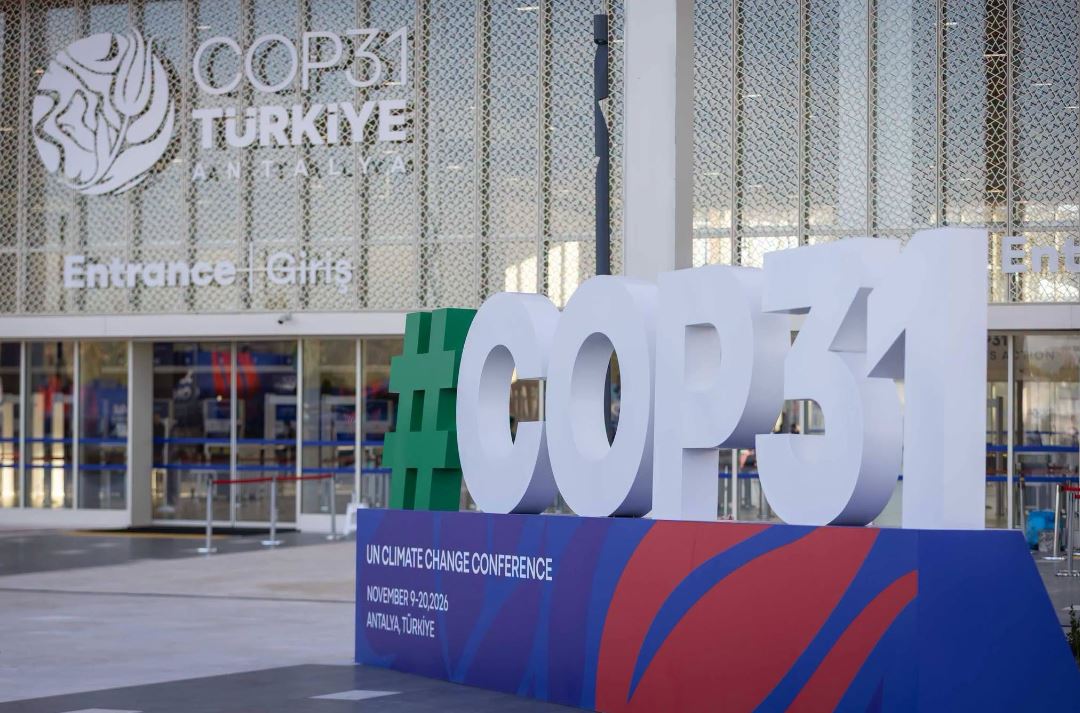
The UN’s COP31 climate summit ended in Antalya, Türkiye, on Sunday without an overarching climate agreement, following deadlocked negotiations over the future of fossil fuels and emissions-cutting targets.
Negotiations continued for two additional days beyond the scheduled conclusion of the two-week summit, but governments failed to reach consensus on the final political text, exposing persistent divisions over commitments to move away from coal, oil and gas.
United Nations Secretary-General António Guterres described the outcome as a “deeply disappointing” setback, warning that the failure to secure consensus did not diminish the urgency of the climate crisis.
“There may be no consensus in the negotiating room. There is no ambiguity in the science,” Guterres said in a statement following the conclusion of the conference.
He warned that global temperatures continued to reach record levels, greenhouse gas emissions remained dangerously high, and climate impacts were intensifying, with the world on course to exceed the internationally agreed 1.5°C warming threshold.
“The take-home message from COP31 is clear: the world must do much more to confront the climate crisis – and it must do it now,” he said.
Disagreements over the inclusion of stronger language on fossil fuels emerged as the principal obstacle to reaching an agreement, with countries divided over the pace and extent of the transition away from fossil fuel-based energy systems.
The negotiations brought together climate-vulnerable countries advocating for stronger action, governments seeking an accelerated transition to cleaner energy and fossil fuel-dependent economies concerned about the implications of more ambitious commitments.
Several delegations subsequently objected to the proposed final text, arguing that it failed to build adequately on previous climate agreements and did not reflect the scale of action required to limit global warming.
Guterres reiterated that fossil fuels remained the primary driver of global warming and criticised efforts to delay the transition to cleaner energy.
“We can’t put out the fire while pouring fuel on it,” he said, warning that powerful fossil fuel interests continued to obstruct climate action while benefiting from the existing energy system.
He recalled the agreement reached at COP28 in Dubai to transition away from fossil fuels in energy systems and called for its implementation to be accelerated and adequately financed.
The UN chief also called for deeper emissions reductions during the current decade, increased adaptation financing and stronger support for countries particularly vulnerable to climate impacts.
He said progress would ultimately be measured by countries’ ability to reduce dependence on fossil fuels, expand clean energy, cut methane emissions, restore forests and provide climate finance to developing countries.
Countries challenge final text
Opposition to the proposed outcome was expressed by several delegations during the closing proceedings, with concerns centring on the absence of meaningful commitments on fossil fuels and what countries described as weakened climate ambition.
The European Union formally objected to the final cover decision, arguing that it failed to reflect the urgency of the climate crisis.
The bloc said it could not support an agreement that made no reference to fossil fuels or the transition away from them, describing the omission as “unconscionable”.
Panama also rejected the outcome, saying governments had a responsibility “not to negotiate the minimum threshold, but to act”.
The delegation argued that the proposed agreement weakened previous commitments and did not adequately address the need to keep the 1.5°C warming limit within reach.
The Marshall Islands withheld its support, warning that the outcome failed countries on the front lines of climate change. Its delegation criticised what it described as “false solutions” and called for a faster transition away from fossil fuels, supported by increased financial assistance.
Pakistan, however, urged countries to preserve the broader negotiating package and continue working towards consensus.
“Climate action requires bridges, not barriers,” its delegation said, acknowledging that elements of the proposed text remained contentious.
Ghana, speaking on behalf of the African Group, identified shortcomings in the outcome, particularly regarding climate finance, loss and damage, and the just transition.
The group said the just transition received only “a single generic sentence” in the text but indicated that it would not block consensus.
Saudi Arabia, representing the League of Arab States, defended the inclusion of carbon capture and storage technologies, arguing that they should remain among the options available to address climate change.
The delegation rejected suggestions that the technology amounted to greenwashing, maintaining that scientific assessments recognised a potential role for carbon capture and storage in limiting global warming.
Presidency acknowledges impasse
COP31 President Murat Kurum acknowledged that governments had failed to reach agreement on the proposed text.
“I understand that there is no agreement on this text. For that reason, these decisions have not been adopted,” Kurum said during the closing proceedings.
Several compromise drafts had been circulated by the COP31 co-presidencies of Türkiye and Australia in an effort to bridge differences among negotiating parties.
The proposals included acknowledging that global warming was on course to exceed the 1.5°C threshold and references to expanding carbon-removal technologies.
However, the revised proposals failed to secure the support required for consensus, with critics arguing that they fell short of existing commitments and did not provide a sufficiently strong response to the climate crisis.
Despite the disagreement over the overarching political outcome, COP31 recorded progress in other areas, including an agreement on just transition and initiatives under the conference’s Action Agenda targeting electrification, climate resilience and investment.
UN Climate Change Executive Secretary Simon Stiell acknowledged the frustration among delegates but urged governments to draw lessons from the negotiations.
“The world cannot afford a repeat of this moment,” Stiell said during the closing plenary.
He called on countries to build on progress achieved during previous climate conferences rather than allow the divisions witnessed in Antalya to undermine international cooperation.
Guterres also urged governments, civil society organisations, young people, Indigenous Peoples, scientists and communities affected by climate change to maintain pressure for stronger action.
“The climate crisis will not wait for governments to find common ground. Neither can we,” he said.
“Keep spreading the facts. Keep demanding action. Keep turning up the heat.”
Attention now turns to COP32, scheduled to take place in Addis Ababa, Ethiopia, where governments are expected to continue discussions on fossil fuel dependence, emissions reductions and the financing required to support climate action in developing countries.
Discover more from CLIMATE BRIEF
Subscribe to get the latest posts sent to your email.