
Bongi Khumalo
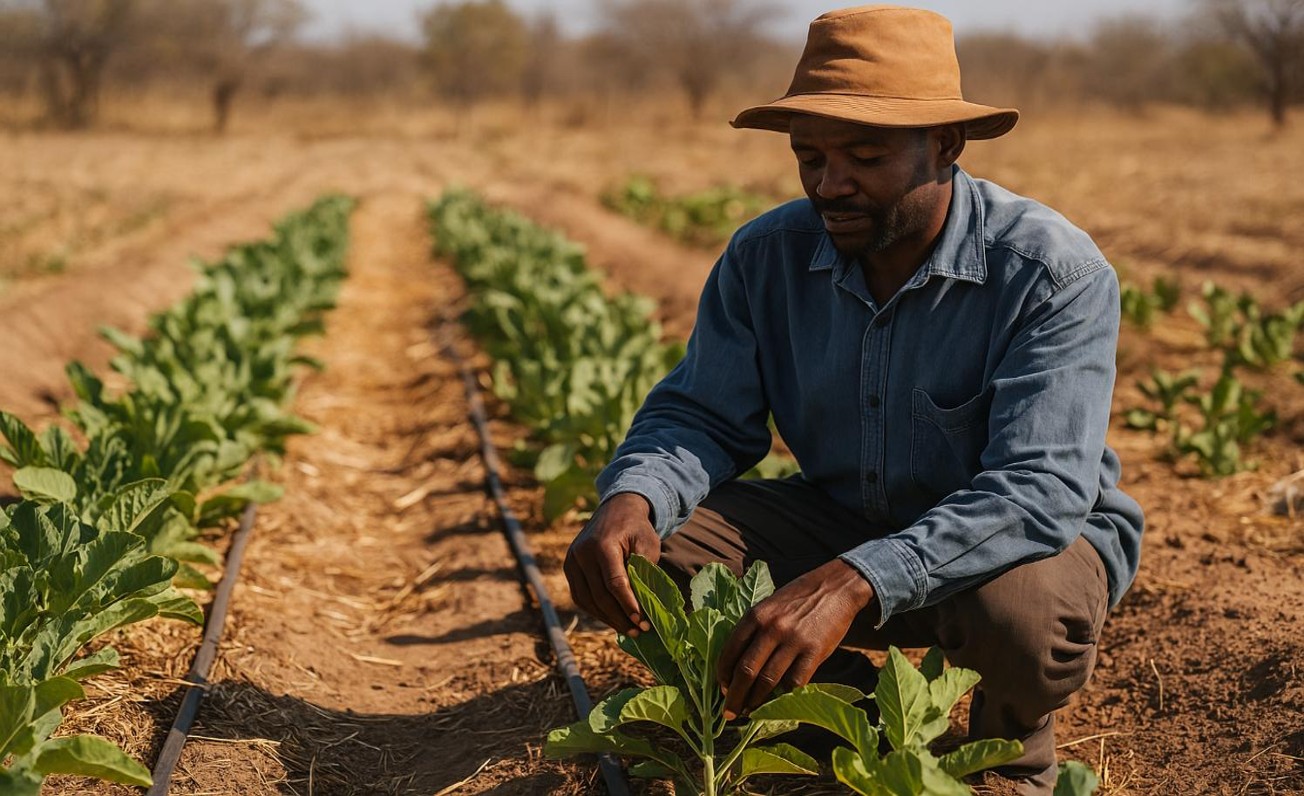
The European Union and the International Fund for Agricultural Development (IFAD) have launched a €14 million programme to help smallholder farmers in Zimbabwe adopt climate-resilient horticultural practices amid increasing water scarcity and climate pressures.
The Agroecological Transitions for Horticulture in Arid Zones (ATHAZ) programme will support farmers in Zimbabwe, Zambia and Botswana to improve water efficiency, strengthen production systems and access better markets.
In Zimbabwe, the programme will build on IFAD’s Horticulture Enterprise Enhancement Project (HEEP), focusing on more efficient water use, resilient seed systems, integrated pest management and sustainable production.
The programme will also strengthen farmers’ links to markets and value-addition opportunities as Zimbabwe faces growing pressure to produce food sustainably while managing water shortages and climate-related risks.
Across the three target nations, the initiative aims to reach approximately 15,000 smallholder households, benefiting around 75,000 people, with a dedicated focus on expanding economic opportunities for women and young farmers.
Implementation will centre on nine regional innovation hubs and strengthening 30 specific horticultural value chains.
“ATHAZ builds on IFAD’s ongoing investments in irrigation and market access in Zimbabwe,” said Francesco Rispoli, IFAD Country Director for Zimbabwe.
“By working with farmers, researchers and extension services to test and scale practical solutions, the programme will help smallholders improve productivity, use water more efficiently and access better markets for their produce.”
In Zimbabwe, the project builds directly on the existing IFAD-supported Horticulture Enterprise Enhancement Project to strengthen local agricultural capacity.
Programme operations will establish nine regional innovation hubs and strengthen 30 distinct horticultural value chains.
These structures are designed to link smallholders directly to higher-value commercial outlets, including domestic, regional, and European markets, alongside increasing farmer access to finance, European agricultural technology, and specialised technical expertise.
Addressing the urgent climate risks facing rural communities, Francesca Fabbri, Chargée d’Affaires a.i. of the Delegation of the European Union to Zimbabwe, highlighted the necessity of sustainable water and land management.
“Every farmer in Zimbabwe knows what a dry season costs,” Fabbri said. “Water can be the difference between a good harvest and a lost one, and it is getting harder to count on.
“ATHAZ starts from what farmers already know and adds research, better access to markets and investment. It means working alongside farmers, especially women and young people, to grow more with less water and to reach buyers who will pay a fair price. The EU is proud to support this, because when smallholders can make a decent living from the land, whole communities benefit.”
Funded under the EU’s DeSIRA+ initiative through 2030, ATHAZ is coordinated by IFAD alongside technical partners including the International Centre of Insect Physiology and Ecology, the Research Institute of Organic Agriculture, and the Biovision Africa Trust.
Working in tandem with national extension systems, government bodies, and private sector entities, the project will generate policy-level evidence to scale sustainable horticulture across Southern Africa.
Discover more from CLIMATE BRIEF
Subscribe to get the latest posts sent to your email.
