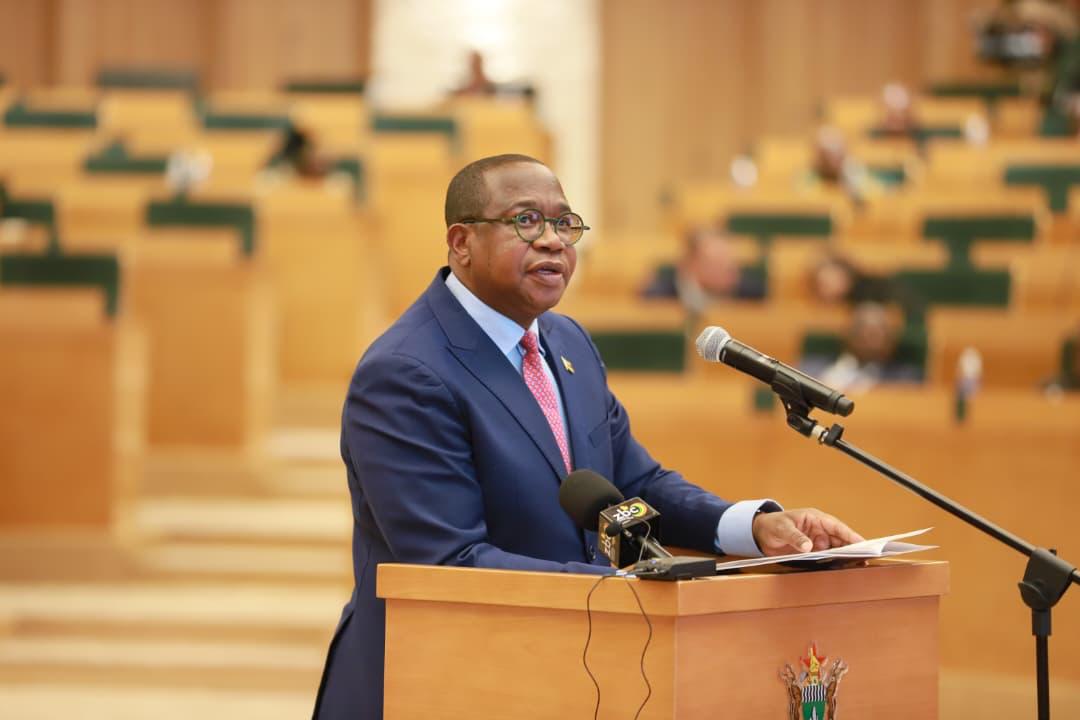
Treasury says the upcoming national budget will be anchored on a six-pillar climate-proofing strategy to buffer the domestic economy against severe El Niño weather patterns.
Minister of Finance Mthuli Ncube said mitigating environmental and external vulnerabilities is crucial to preserving Zimbabwe’s target macroeconomic trajectory.
“The budget will articulate ways to climate-proof the economy with a six or seven-pillar strategy for that to deal with the El Niño shocks, which involves investment in irrigation, again tapping down on investment in our dams, and also making sure that we open up the borders for those who need to import, and then also make sure that we have enough grain to support those who are vulnerable,” he told reporters in Bulawayo.
Central to the upcoming fiscal package is a structured intervention plan that combines direct physical investment in water control with market adjustments and social safety nets.
Under the proposed strategy, government funding will focus on expanding dam construction and accelerating irrigation infrastructure development to reduce reliance on rain-fed farming.
To address immediate food security demands during crop shortfalls, the framework provides for open border mechanisms to facilitate essential food imports alongside dedicated grain allocations for vulnerable communities.
To counter the impact of shifting weather patterns on agriculture, the backbone of Zimbabwe’s rural economy and food security, the government is directing resources toward immediate and long-term climate adaptation measures.
In addition to expanding water storage infrastructure and streamlining grain import mechanisms, the government plans to deploy weather modification and financial risk transfer instruments to safeguard crop yields and public funds.
“Cloud seeding is yet another pillar of that strategy, as well as making sure that we can access sovereign insurance to support those who are vulnerable, at the same time being able to absorb shocks from the external front, the oil shocks in the main and the global supply chain shocks,” Ncube added.
While the primary focus centres on insulating the domestic market from climate-driven agricultural shortfalls and international disruptions, the Treasury chief reassured that the fiscal policy will balance protectionism with aggressive expansion.
The strategy will be formally operationalised in the national budget presentation, establishing specific capital allocations and policy guidelines for each pillar.
“Given these potential shocks of El Niño, global oil shocks, political tensions and so forth, the budget needs to buttress resilience in terms of macroeconomic stability, in terms of absorbing the shocks to create a more resilient economy going forward so that we can maintain that golden minimum 5% rate of growth,” Ncube said.
Discover more from CLIMATE BRIEF
Subscribe to get the latest posts sent to your email.