Communities in Muwango Village in Chipinge are strengthening forest-based livelihoods and climate resilience through community-led tree planting and innovative biochar production in a strategic move to buffer one of Zimbabwe’s critical botanical reserves.
Supported by the Food and Agriculture Organisation of the United Nations (FAO) and the Government of Italy under the Miombo Transboundary Initiative, the initiative aims to decouple local energy needs from the exploitation of indigenous woodlands.
The initiative was showcased during Zimbabwe’s National Tree Planting Day, when community members, government officials and development partners came together to establish a 2.5-hectare community woodlot.
The woodlot will provide a sustainable source of firewood and construction poles, reducing pressure on nearby indigenous forests, including Chirinda Forest and surrounding miombo woodlands.
The Provincial Forestry Extension Manager commended the community for taking a proactive approach to forest restoration and sustainable resource use, noting that the woodlot would not help meet future household energy needs while strengthening the community’s beekeeping activities.
“Muwango village is demonstrating how local leadership and partnerships can deliver practical solutions that protect forests while supporting livelihoods,” said the Provincial Forestry Extension Manager, Philip Tom.
“The community woodlot will ease future energy needs and directly support ongoing beekeeping activities by enhancing bee forage.”
A total of 71 participants, 68% of them women, attended the event, during which 300 seedlings were planted, with a further 1 000 seedlings scheduled for planting.
The community plans to plant at least 1600 Eucalyptus seedlings per year over the next three years.
Located along the boundary with Chirinda Forest, the woodlot is expected to serve as a buffer zone, reducing pressure on protected areas and contributing to improved forest conservation.
Linking conservation, livelihoods and FAO support
Muwango Village is implementing diversified livelihood initiatives, including horticulture, aquaculture and apiculture, with long-standing support from the Green Institute, a local community-based organisation. FAO is building on this existing foundation to strengthen and scaleup community initiatives.
In October 2025, the community harvested around 100 kg of honey, sold it to the Forestry Commission and earned about US$300, demonstrating growing capacity to participate in sustainable forest-based value chains.
The community currently has 30 hives, 12 of which are colonised. The project will support the group with 10 more Kenyan Top Bar hives and timber for local hive construction, which is expected to double the amount of hives by the end of the year.
If all 60 hives are colonised, honey production could reach around 900 kg per harvest, generating an estimated income of USD 1 800 at a wholesale price of USD 2 per kilogram..
Speaking at the event, the FAO National Project Coordinator, Maxwell Phiri, outlined FAO’s mandate to support food security, agricultural production and sustainable natural resources management.
He introduced the Miombo Transboundary Initiative, implemented by FAO in Zimbabwe and Mozambique.
He highlighted planned 2026 activities, including beekeeping, capacity building, equipment provision, fire management training, and support for community-based forest monitoring.
“Through the Miombo Transboundary Initiative, FAO is working with communities and government partners to strengthen livelihoods while conserving critical forest ecosystems,” said the FAO National Project Coordinator.
Turning an invasive species into a climate-smart solution
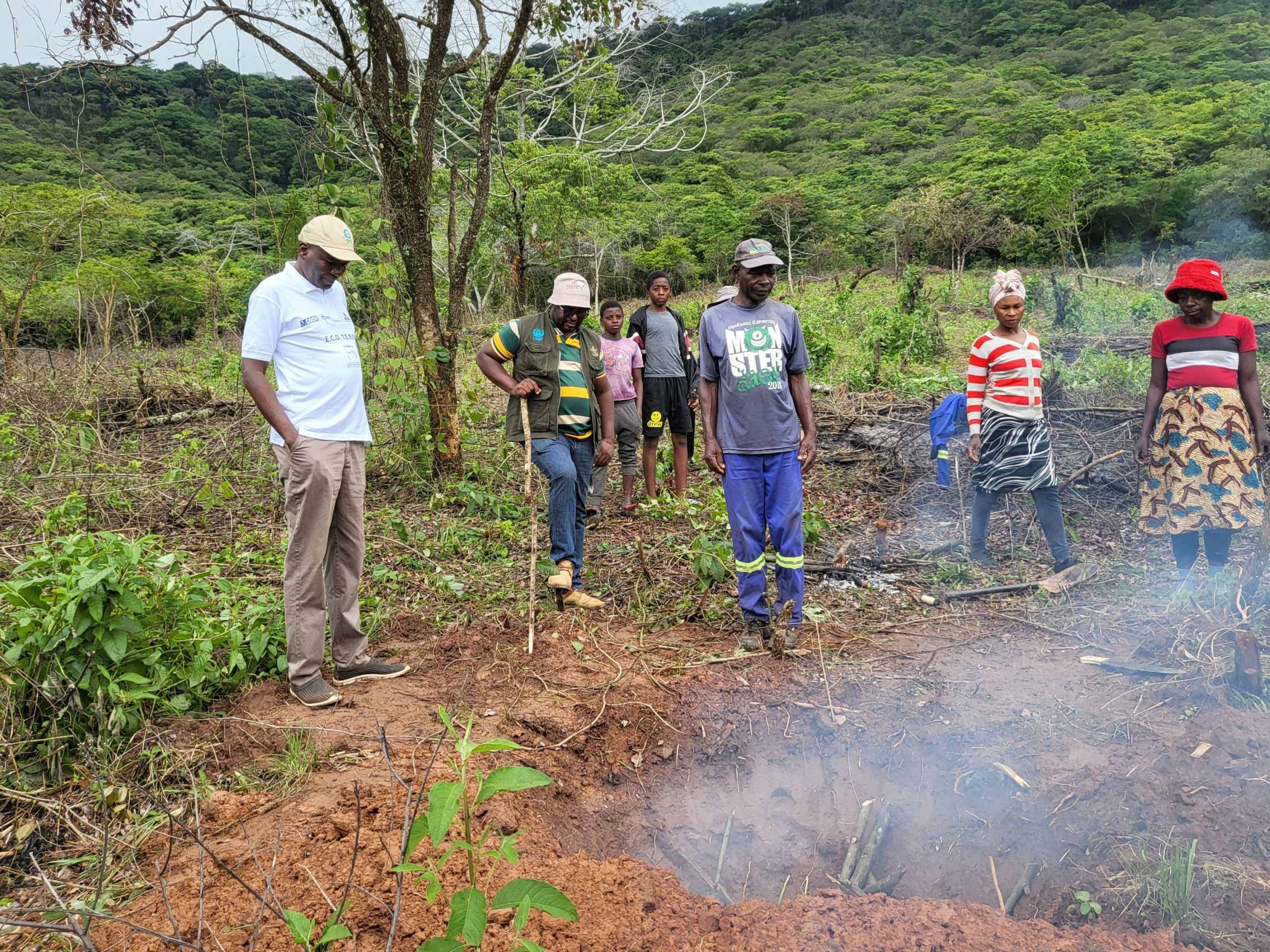
The programme also featured a practical demonstration on producing biochar from the invasive species Vernonanthura polyanthes. Forestry Commission specialists demonstrated how biochar can be mixed with manure or fertiliser to improve soil fertility and nutrient retention while simultaneously helping control the spread of the invasive plant.
Community members were encouraged to avoid charcoal production from indigenous trees to protect natural forests.
To ensure environmental safeguards in the production of biochar, the Forestry Commission has a resident officer who will be supporting the group, and there will be strict adherence to the FAO and Forestry Commission’s standard operating procedures and guidelines on creating biochar.
“Community members will also be trained to avoid risks associated with carbon monoxide fumes and fire hazards,” added Maxwell Phiri.
The Village Head of Muwango thanked FAO, government institutions and partners for their continued support and called for sustained capacity development to ensure the long-term success of community initiatives.
Discover more from CLIMATE BRIEF
Subscribe to get the latest posts sent to your email.