Zimbabwe is poised for a shift to normal-to-above-normal rainfall for the 2025-2026 season after surviving a record-breaking mid-season dry spell during the last agricultural cycle.
However, the United Nations World Food Programme (WFP) has issued a warning that the return of La Niña conditions brings heightened risks of flooding and tropical cyclones that could threaten the country’s fragile food security recovery.
According to the WFP’s latest Southern Africa Seasonal Outlook, the region is transitioning out of the El Niño phase that left an estimated 55 to 68 million people food insecure across Southern Africa.
While the incoming La Niña is expected to be “weak and short,” it typically enhances rainfall, offering a vital opportunity to boost agricultural production in Zimbabwe.
The Zimbabwean Meteorological Services Department (MSD), cited in the WFP report, indicated that while the season had a delayed onset in October, rains are expected to begin in earnest from late November or early December.
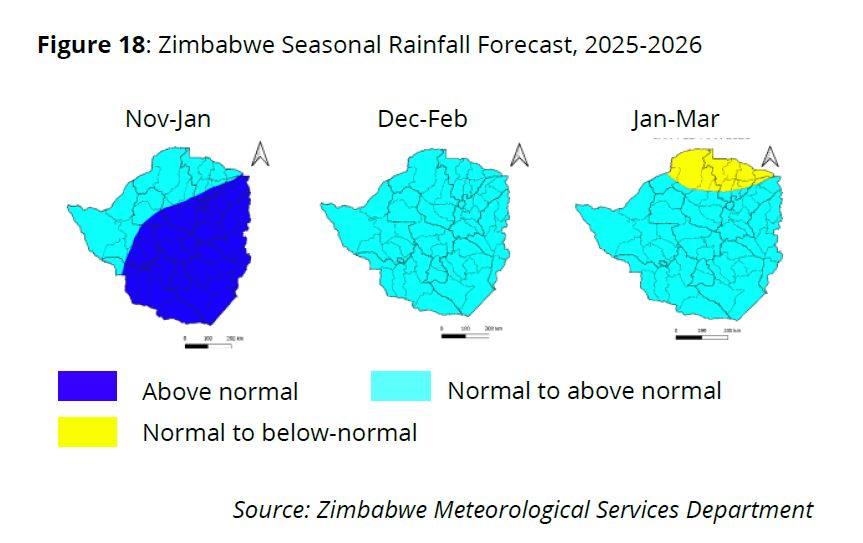
The outlook projects normal to above-normal rainfall across much of the country through the peak agricultural season.
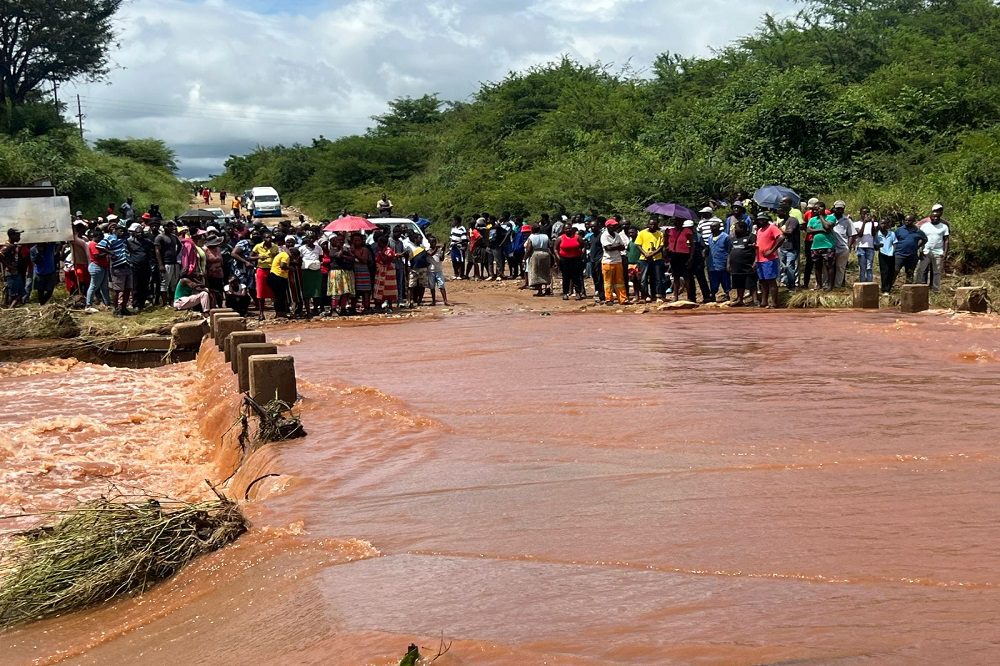
However, the WFP notes a critical divergence in conditions. It says Southern Zimbabwe is at specific risk of riverine flooding, particularly in the Limpopo basin.
WFP said while starting wet, northern zones may experience drier conditions toward the tail end of the season (January to March 2026).
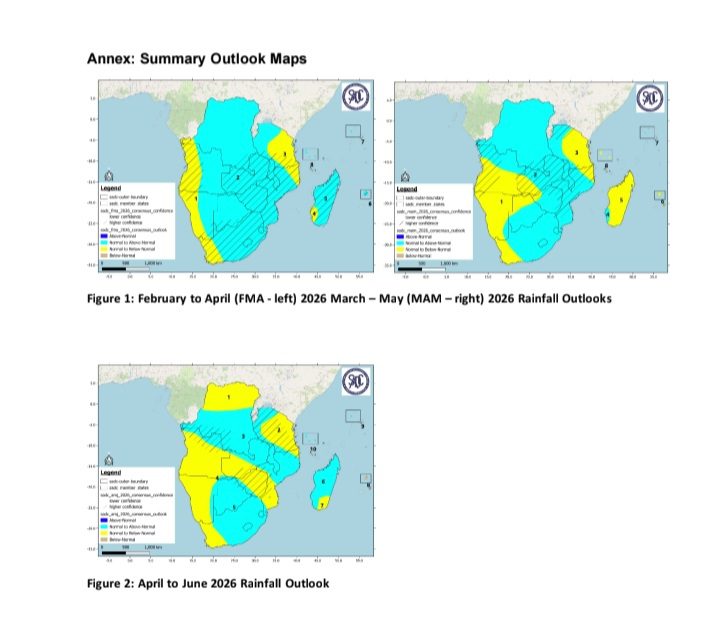
According to the report, a major concern for disaster management authorities is the forecast for the South-West Indian Ocean cyclone season.
The WFP warns of “average to above-average cyclonic activity,” predicting the formation of 10 to 14 named storms this season.
Of these, 5 to 8 could reach tropical cyclone intensity. While Madagascar and Mozambique face the highest direct risk, the WFP explicitly highlights that Zimbabwe remains vulnerable to severe impacts from these systems.
Despite the prediction for good rains, the report warns that high temperatures could undermine crop yields.
The forecast indicates a high likelihood of above-normal temperatures across many parts of the region.
“Higher temperatures mean increased evapotranspiration, therefore reducing the water availability to crops,” the report states.
This creates a scenario where crops could experience moisture stress even during periods of good rainfall or suffer damage from heat stress during critical flowering stages.
The WFP said it is currently implementing anticipatory action programmes in Zimbabwe to protect vulnerable populations from predictable shocks.
The agency called for the implementation of water harvesting programs and the pre-positioning of resources.
It warned that flooding can be just as devastating as drought, potentially waterlogging fields, destroying infrastructure, and displacing communities recovering from the previous season’s hunger crisis.
Discover more from CLIMATE BRIEF
Subscribe to get the latest posts sent to your email.