Staff Writer
Zimbabwe is set for another wet summer, with climate experts confirming a strong likelihood of La Niña conditions that are expected to drive normal to above-normal rainfall across most of the country for the 2025-2026 cropping season.
The La Niña phenomenon is a natural climate cycle characterised by cooler-than-average Pacific Ocean temperatures, typically associated with above-normal precipitation and cooler weather.
Speaking at the National Climate Outlook Forum in Harare, Meteorological Services Department director Rebecca Manzou said the forecast is pointing to a normal to above-normal rainfall across most of the country for the 2025-2026 summer cropping season.
“As the first updated system forecast after September 2025, we are happy to let you know that our climate experts, working with academia and regional partners, agree that we are heading into a La Niña phase,” she said.
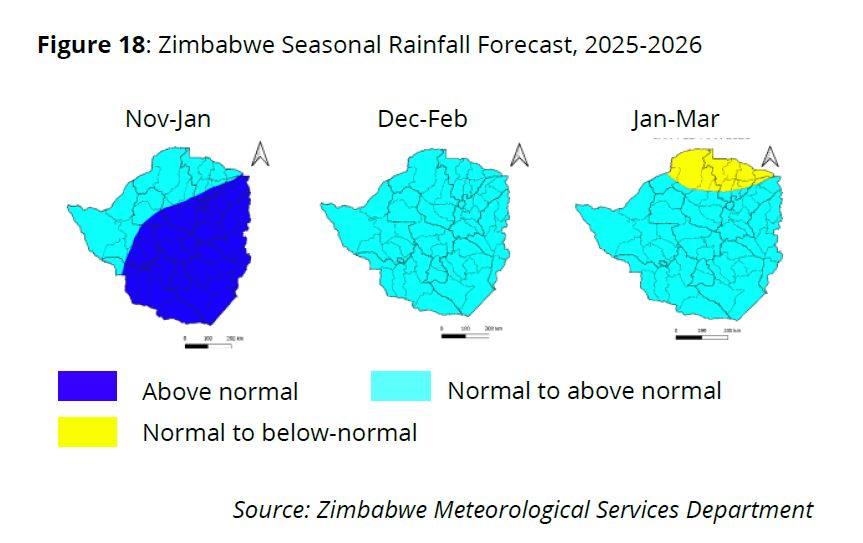
She said most parts of Zimbabwe can expect normal-to-above-normal rainfall between November 2025 and March 2026.
“In general, from November to January, the northern part of the country is normal to above normal rainfall,” Manzou said.
“The bulk of the country, which includes Manicaland, Masvingo, most of Mashonaland East, Harare Metropolitan, much of Midlands, the southern parts of Mashonaland Central and West, the south-eastern part of Mashonaland North, Bulawayo Metropolitan, and the bulk of Matabeleland South, has an increased chance of above normal rainfall.
“Also, from November to January, in the northern and western parts of the country, there is an increased chance of normal to above normal rainfall. So, we are at a good place as a country,” Manzou said.
For the period December 2025 to February 2026, Manzou said rainfall is expected to remain within the normal to above-normal range, with the same trend likely to continue from January to March.
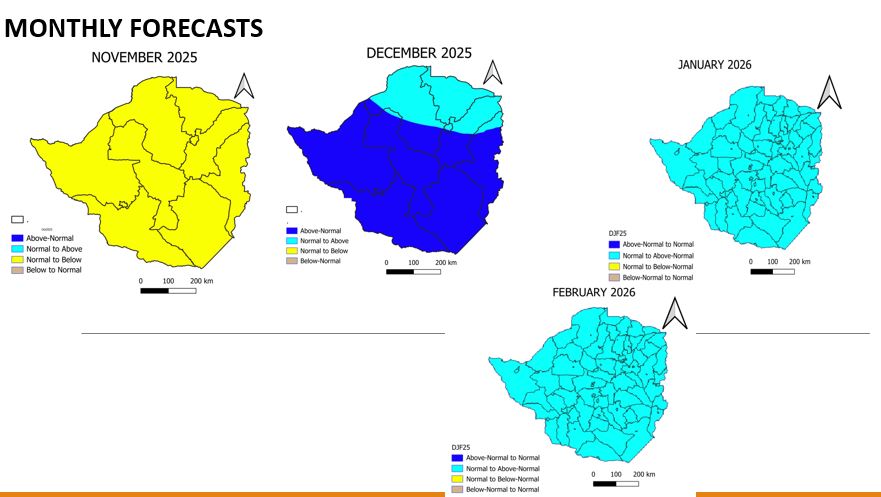
For December, she said rainfall distribution in the southern parts of the country will be higher compared to the northern parts.
“January is expected to have a normal to above normal…February, normal to above normal… it is a cumulative rainfall pattern,” Manzou said.
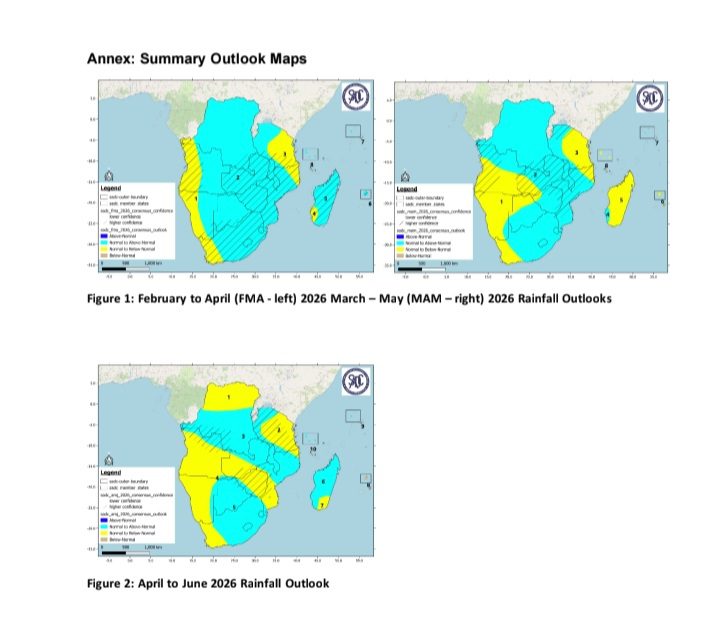
The forecast comes as the Southern African Regional Climate Outlook Forum said the region is expected to receive mostly normal to above-normal rainfall during the 2025/26 rainy season.
The forecast was developed by climate experts from national meteorological and hydrological services across the Southern African Development Community.
The forecast indicates that most of the southern region will experience favourable rainfall conditions between October and December 2025, except for the western fringes of Namibia and the island states of Comoros, Madagascar, Mauritius and Seychelles, which may see below-normal rainfall.
“The period of January to March 2026 is expected to have normal to above normal rainfall for most of the region except for the northern parts of the region (Angola, DRC and Tanzania) where normal to below normal rainfall is expected,” the Southern African Regional Climate Outlook Forum (SARCOF-31) said in a statement.
“Above normal rainfall is expected in the southwestern parts of the region, while the bulk of Madagascar, Mauritius and Seychelles are expected to receive normal to above normal rainfall, with Comoros receiving normal to below normal rainfall during the January to March 2026 period.”
Temperatures across the SADC region are projected to remain above historical averages throughout the season, with the exception of some central areas.
The climate outlook also notes that the El Niño–Southern Oscillation is expected to transition into a weak La Niña phase.
The El Niño phenomenon is associated with drought conditions in SADC, while La Niña brings heavy rains to the region.
The SARCOF-31 outlook, developed with support from the SADC Climate Services Centre and global climate partners, guides regional planning in agriculture, water management, disaster preparedness, and public health.
Discover more from CLIMATE BRIEF
Subscribe to get the latest posts sent to your email.